
The Yagi-Uda antenna is one of the most popular directional antennas. It allows concentrating the radio signal in a specific direction (drastically increasing gain and range) and blocking interference from other directions.
In tactical emergency operations, a Yagi built with metal measuring tape, thick wire, or aluminum tubes allows establishing vital long-distance links when local repeaters have gone down.
How it works
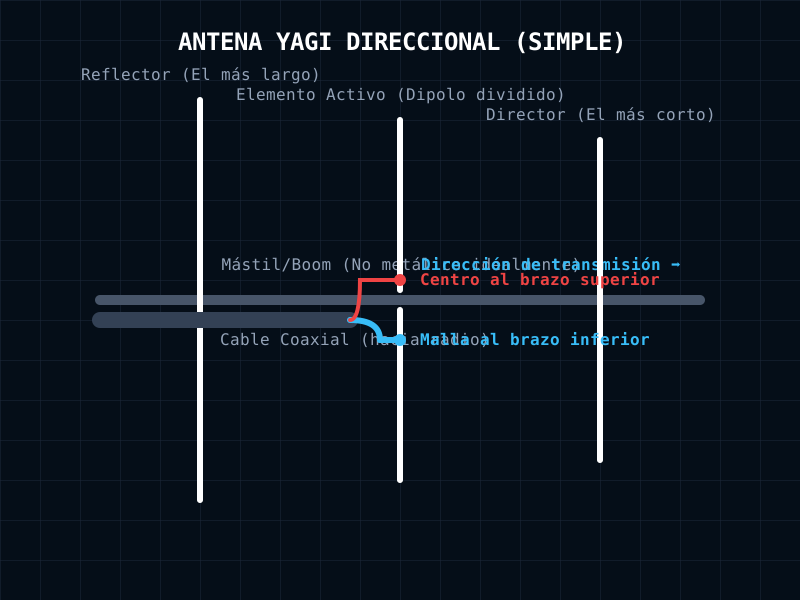
- Reflector: The longest element, placed behind the driven element. It bounces the signal forward.
- Driven Element: The only element directly connected to the coaxial cable (usually a half-wave dipole).
- Director: The shortest element, placed in front. It helps focus the radio beam.
Tactical Yagi Calculator
Enter the operating frequency to get the cutting measurements and the spacing distances on the central boom.
⛺ Emergency Deployment Guide (For Non-Techs)
- Setup: This is a directional antenna; it works like a car’s headlight. You must point it exactly where the other station or repeater you want to communicate with is located. For emergency VHF/UHF or handheld radios, mount the tubes Vertically (up and down).
- Recommended Height: Mount it on a mast, balcony, or tripod, at least 6 to 10 feet off the ground and away from metal obstacles.
- Isolators: The metal elements can be screwed or taped directly to a non-conductive boom (central stick), such as a thick PVC plastic pipe or dry wood.
- Feed Line (Coaxial): 50-ohm cable (RG-58) is ideal. In an absolute emergency, 75-ohm (TV) cable will work acceptably, assuming you cut the element measurements correctly.
Document prepared and approved by:
Pablo Rocchetta HP1PAR / LU2ECV
Revision V1.0
Do you have suggestions or corrections? Visit the Suggestions Box.
Pablo Rocchetta HP1PAR / LU2ECV
Revision V1.0
Do you have suggestions or corrections? Visit the Suggestions Box.