
1. The “Gear Fallacy”: Why Buying Equipment Is Not Being Prepared
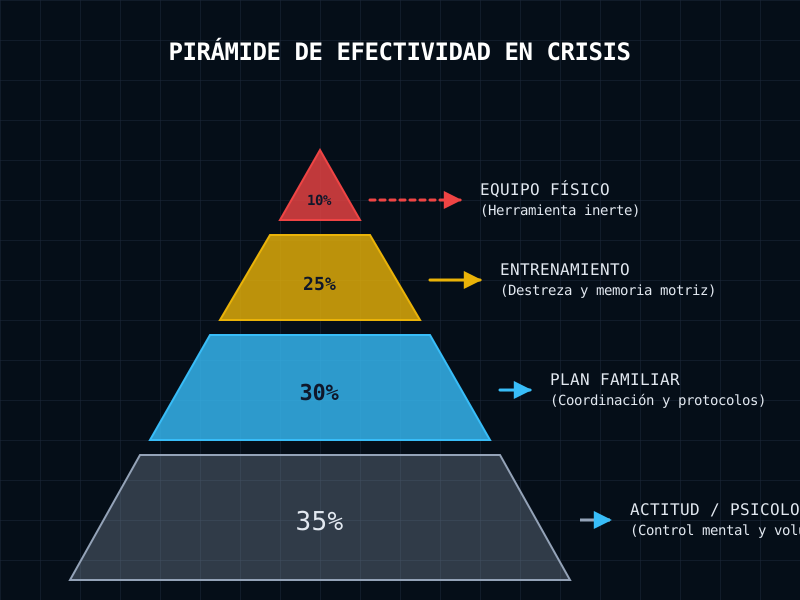
In risk management and emergency preparedness, there is a recurring cognitive bias: the illusion of security through acquisition. Buying a water filter, top-tier radio, solar generator, or trauma kit provides immediate psychological comfort; yet inanimate objects possess zero operational value if the user lacks muscle memory, technical skill, and emotional composure under acute stress.
As the ancient Greek poet Archilochus famously observed (adapted across special operations and rescue units):
“We do not rise to the level of our expectations; we fall to the level of our training.”
2. The Four Pillars of Real Response Capability
Equipment is merely a multiplier. A tourniquet or HF rig is useless if misapplied under stress or if complexity outstrips user competency.
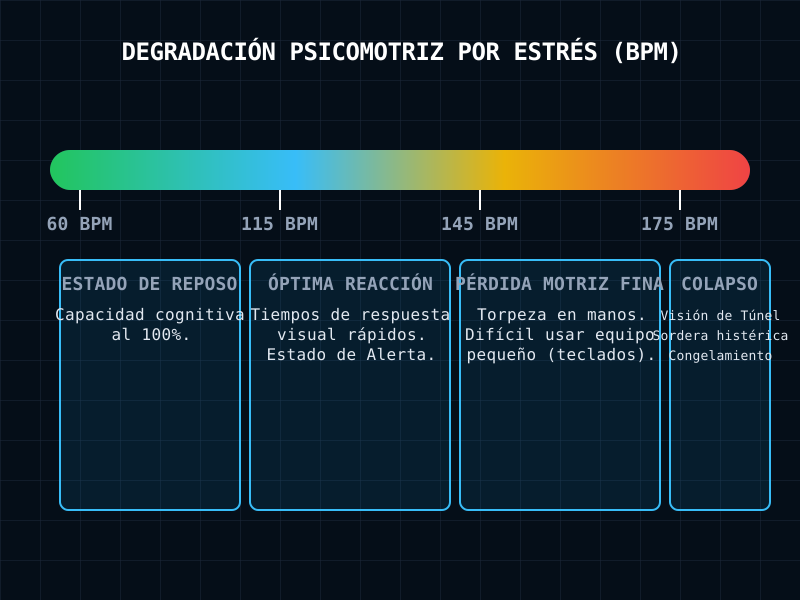
Under threat, heart rates surge beyond 145 BPM degrading fine motor dexterity. Only prior stress inoculation prevents panic-induced freezing.
Skills turned into muscle memory: tuning without looking at the screen, deploying antennas in heavy rain, or filtering water in total darkness.
Agreed primary and secondary rendezvous points, out-of-area relay contacts, and pre-set radio channels when cellular voice networks fail.
3. Empirical Evidence: Where Human Factors Made the Difference
• The Event: The crew broadcast repeated orders over PA speakers instructing hundreds of high school students to "stay seated in cabins and do not move." Most victims passively obeyed out of authority bias.
• Critical Lesson: Physical gear (abundant life jackets and rafts) was rendered useless by blind obedience and psychological freezing.
• The Event: Over 2,900 students survived despite school submersion because they practiced Tsunami Tendenko (immediate evacuation to high ground without waiting for adult commands).
• Critical Lesson: No delay occurred gathering backpacks: the emergency evacuation reflex was fully conditioned into muscle memory.
• The Event: Thousands owned emergency flashlights, tools, and shoes stored in garages or deep closets, which were blocked by toppled shelving and broken glass in 4:31 AM blackout darkness.
• Critical Lesson: Equipment stored out of reach is non-existent in a crisis; vital survival items must be staged and directly accessible.
4. Progressive Family Training Schedule
| FREQUENCY | PRACTICAL DRILL ACTIVITY |
|---|---|
| Monthly | • "Blackout Drill": Flip main breaker for 2 hours; navigate in darkness, retrieve flashlights/radios. • Radio comms check: Status check on local network (VHF / FRS / Meshtastic). |
| Quarterly | • Loaded family rucksack hike: Adjust harness fit and pack weight. • Field water filtration practice: Real drill with portable filter or chemical purification. • First aid and pantry expiration inspection: Rotate expired medication and batteries. |
| Biannual / Annual | • Rapid evacuation drill: Goal: fully packed and out the door in < 5 minutes. • Physical route check: Walk/drive secondary rendezvous routes. • Encrypted backup refresh: Update offline digital vital documents. |
5. Standard Family Contingency Pocket Card
Carry this laminated waterproof card in wallets/packs:
FAMILY EMERGENCY CONTINGENCY CARD
[Carry in wallet or emergency pack]- • PRIMARY (Local): [Neighborhood park or landmark]
- • SECONDARY (Safe Zone): [Out-of-city designated site]
- • PRIMARY: FRS Ch 1 / VHF 146.520 MHz Simplex
- • SECONDARY: CB 9 / Meshtastic LongFast (906.875)
- • LISTENING WINDOW: Minutes 00 to 15 of every hour.
- • NAME: [Relative/friend in other province/country]
- • PHONE/SMS: [Full number with country code]
IF COMMS FAIL: Remain at official designated assembly area until designated adult arrives, or relocate to Primary Point only if structure is unsafe.
6. Doctrinal Conclusion
True readiness is not measured by gear hoarded in closets or tactical accessories. It is measured by individual resilience and group cohesion.
Gear is only metal, plastic, and circuitry; training provides the competence to use it, and psychological conditioning provides the composure to persevere when conditions turn severe.